Honey-keeping
An invention of the kipsang, the tradition of keeping honeyflies is a longstanding practice. Honeyflies and their hives have been present across Arra since time immemorial, their honey a valuable resource.
There are two main disciplines of honey-keeping: Open, and enclosed.
Open honey-keeping relies on the harvest of naturally formed hives and honeycombs, the sort found in the hollows and boughs of trees, cavities in the ground, and caves. These hives are allowed to operate freely, without much intervention outside of the harvesting process itself. While this sort of hands-free honey-keeping takes away the need to care for and monitor a hive, it does present several challenges. A wild hive is more susceptible to damage and predators, and may be more difficult (or dangerous!) to reach. This can make smoking the insects tedious as well. Open honey-keepers are more likely to get stung or injured while working, and the amount of honey that can reliably be transported back home is limited.
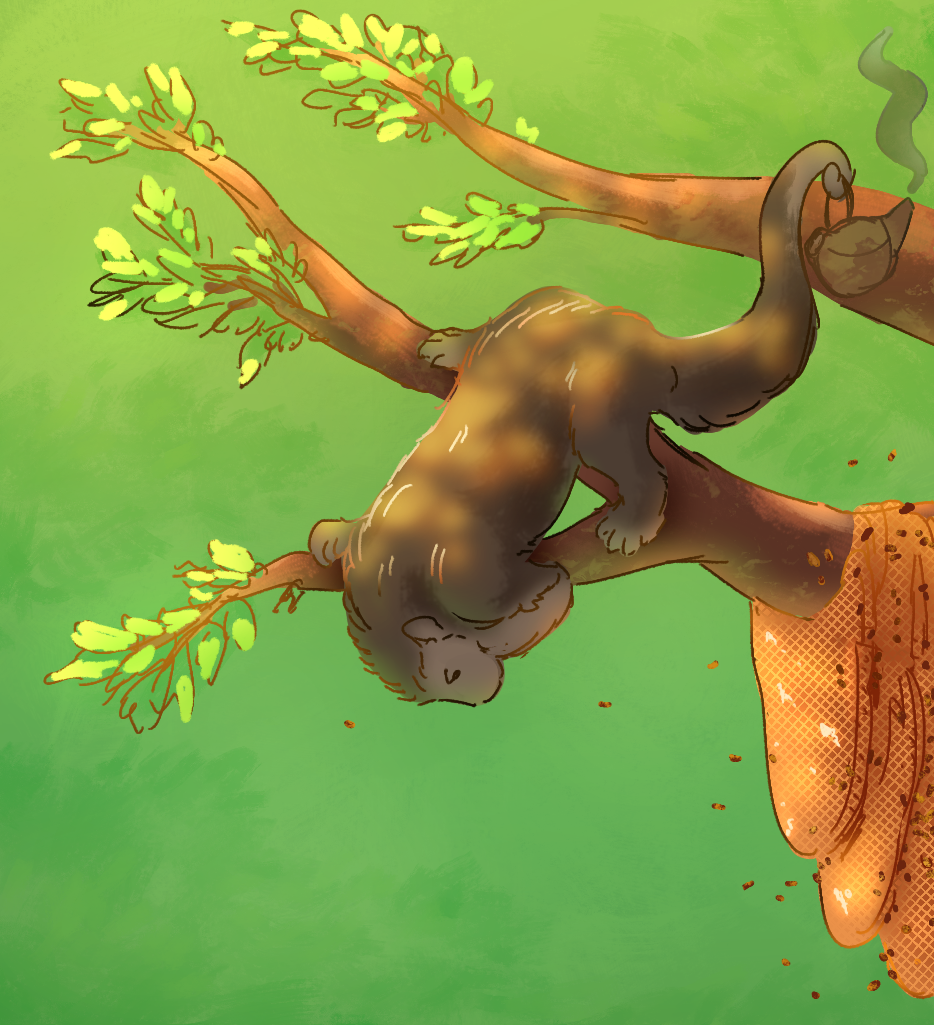
A honey-keeper engaging in open type harvest. They have with them a smoke blower held in their tail. They are preparing to dangle down and smoke the honeyflies, then break off and collect a fresh chunk of comb. (Lines by Kell, colors by Winn)
Enclosed honey-keeping, as the name implies, relies on contained nests, commonly kept in baskets or specially prepared tree-hollows. These hives are carefully maintained; smoked regularly and inspected by their keepers. Some keepers prefer to cultivate particular varieties of honey by limiting the honeyflies' access to a smaller range of flowers. The change in nectar available, in turn, changes the taste of the honey produced. While its a lot more work, the practice of enclosed honey-keeping is reliable, safe, and versatile.
Return to Culture and Technology
